We Are 26 — A FIFA World Cup 2026 Live Dashboard
01 · Context
A FIFA+ broadcast, built entirely in an AI design tool.
The FIFA World Cup 2026 Live Dashboard is a broadcast-grade, six-page tournament experience — 104 match fixtures, animated Panini-style player cards, a CSS knockout-bracket visualizer, and live tournament-state logic — designed to feel like a FIFA+ broadcast. Every screen was generated with Google Stitch and shipped on Netlify.
The goal wasn't a pretty mockup — it was a real, deployed, real-time-aware product that looks like it came off a broadcast graphics desk.
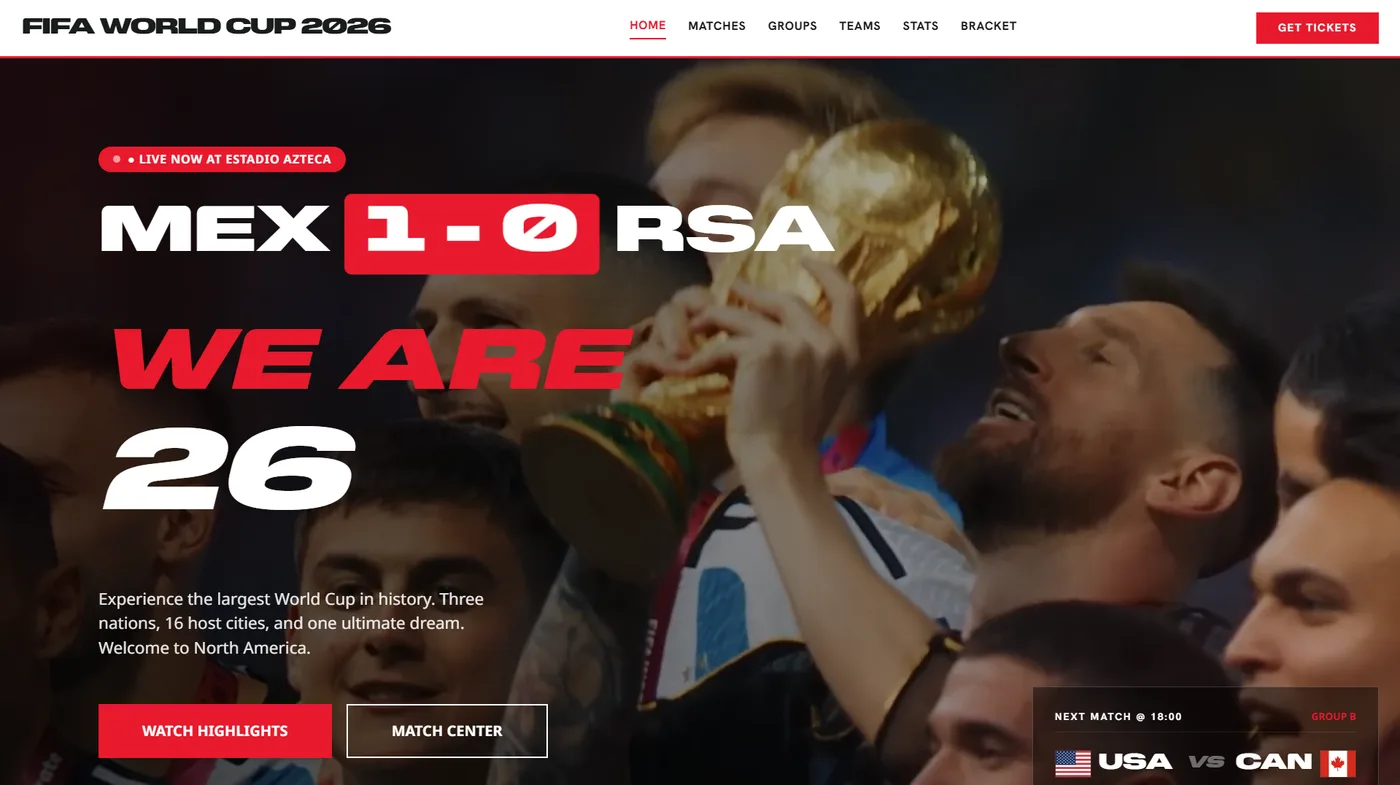 Home hero — the broadcast-style landing with the live tournament state
02 · The Brief
Build interfaces that feel alive.
The Google Stitch Challenge (on Contra) wasn't asking for a single hero screen. It rewarded process, iteration, interaction, and how Stitch fits a real workflow — and showcasing Stitch's newest capabilities (streaming generation, in-place AI edits, native motion, imports, MCP).
Winner — Google Stitch Challenge, Contra.
03 · The Direction
Broadcast polish, not dashboard defaults.
The angle on 'alive': treat it like live sports television. Real-time awareness, the nostalgia of collectible player cards, and the motion language of a broadcast lower-third — so the interface feels like it's running, not just sitting there.
The home hero after the cyberpunk → FIFA-broadcast redesign04 · The Six Pages
A full tournament, end to end.
Six connected screens make up the experience:
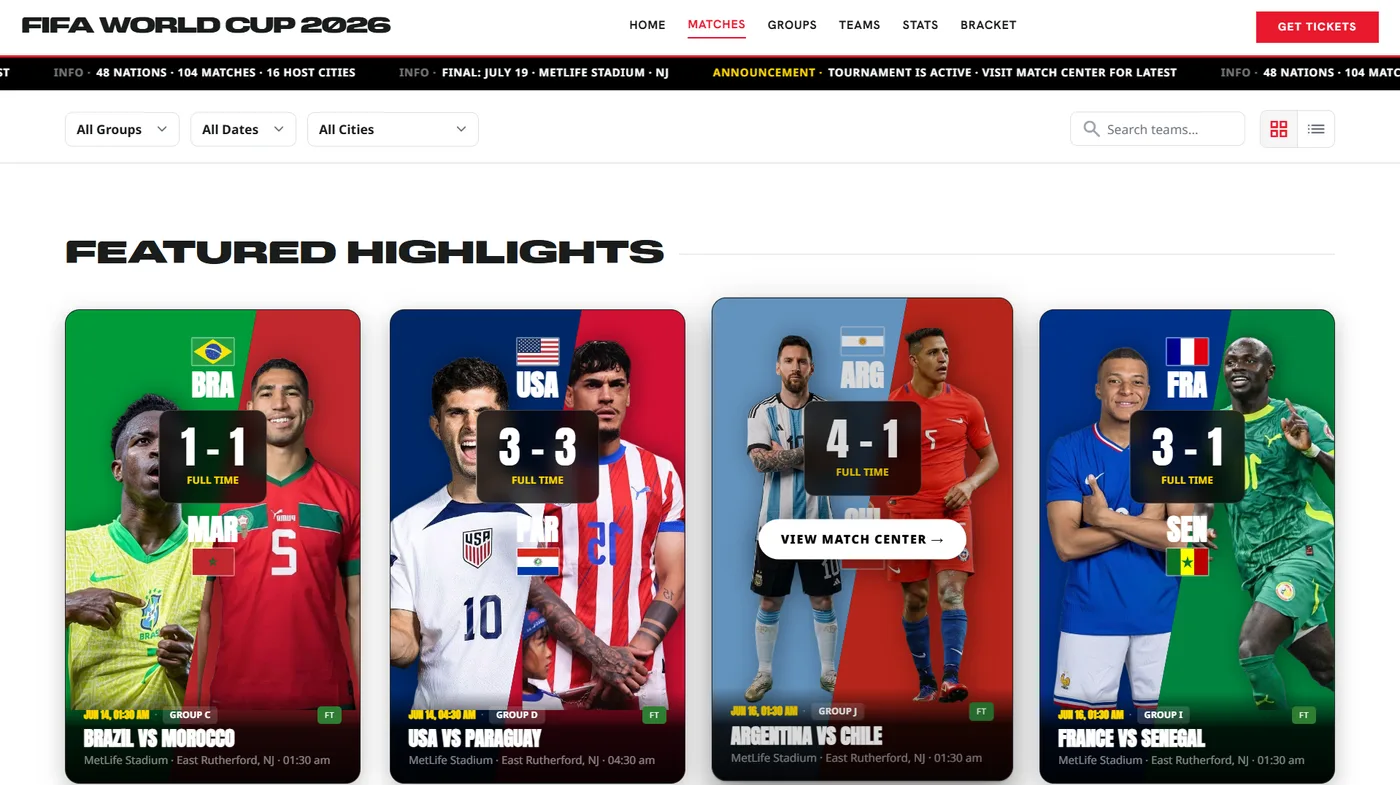 Fixtures grid — the 104-match cards
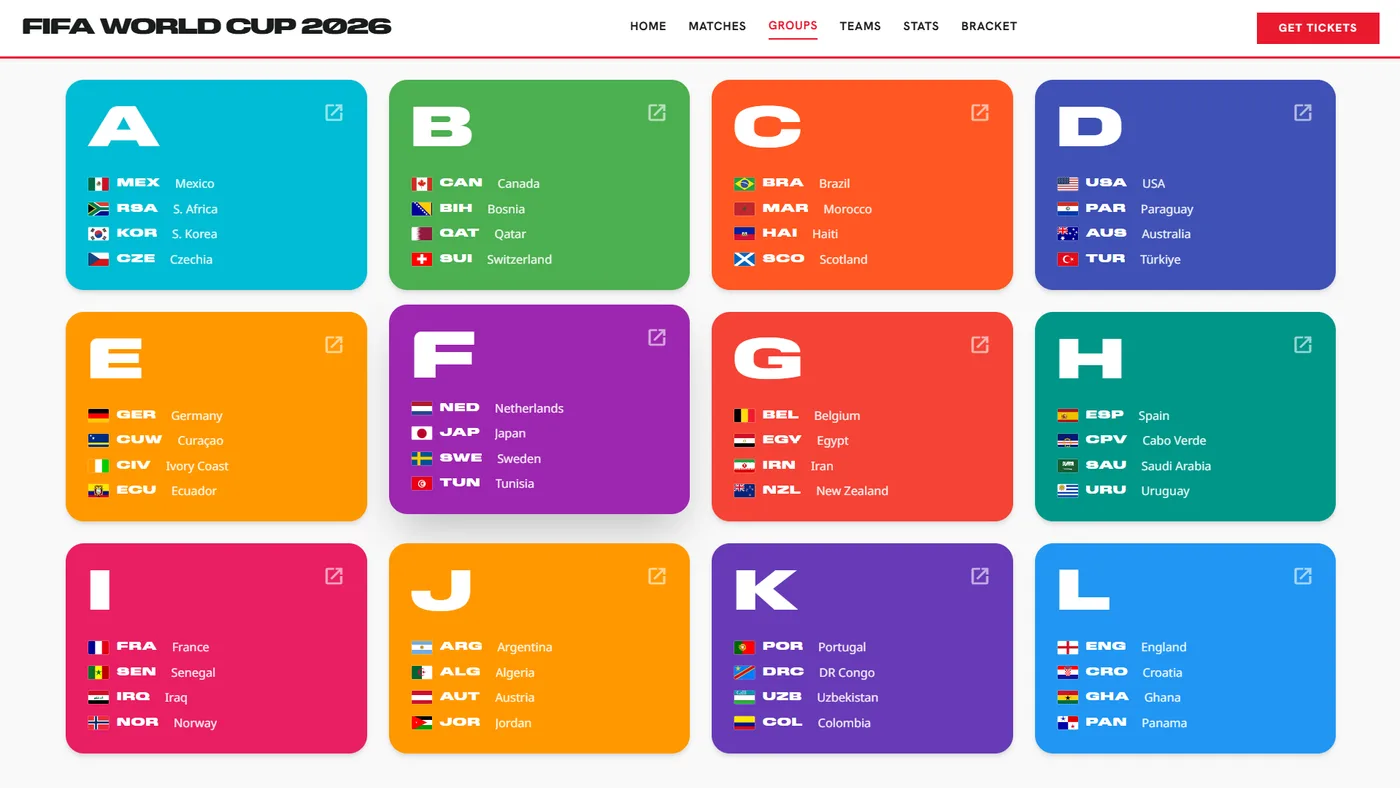 Groups — the eight-team pools, color-coded by group
05 · The Workflow
Where this gets interesting.
The whole thing was designed and generated through Stitch. The process, step by step:
Uploading the brand kit as design.md meant Stitch generated on-brand from the first screen — the system led, not the other way around.
06 · Motion & Interaction
Making it feel live.
The 'alive' requirement, delivered in the details: animated Panini-style player cards, CSS-drawn bracket connectors that animate between rounds, live tournament-state logic driving what each screen shows, and broadcast-style motion and hover states across the pages — all HTML-native, no heavy framework.
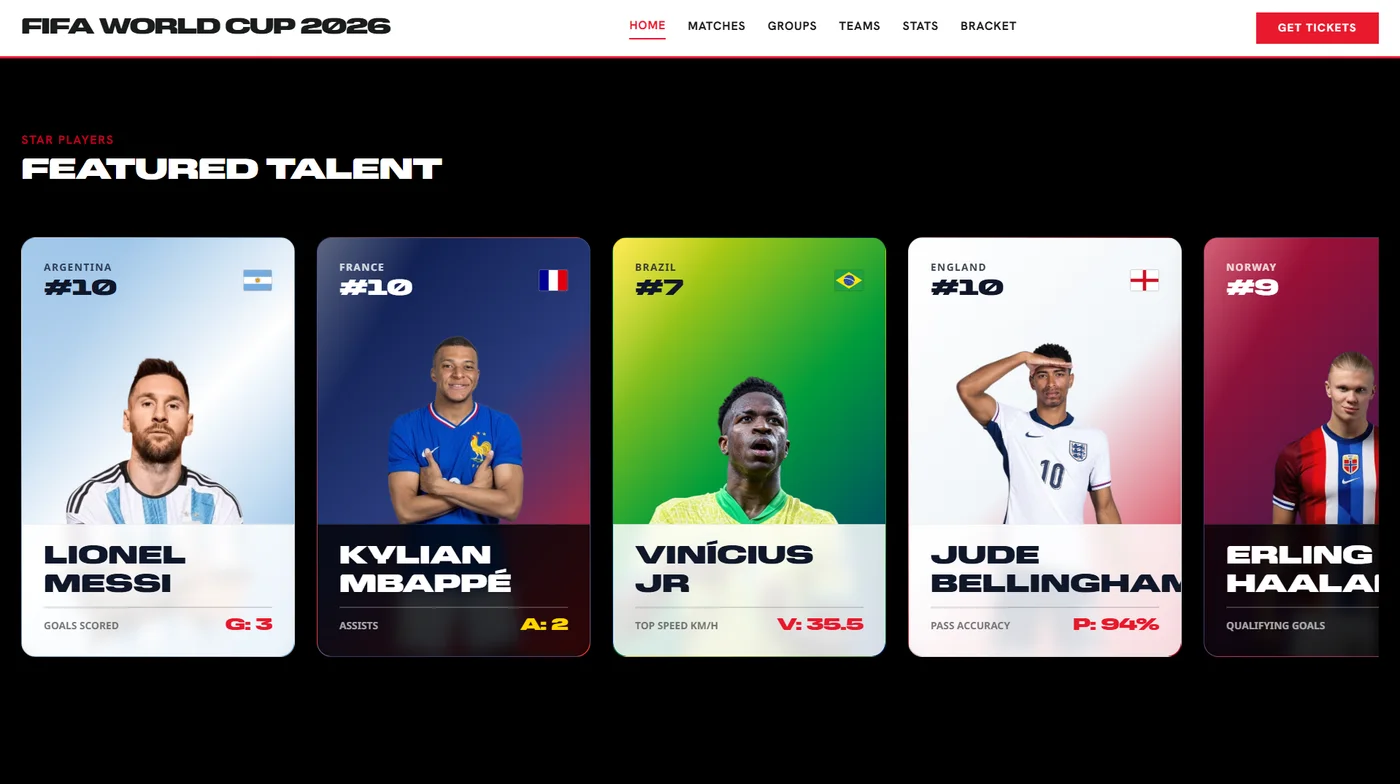 Player card — the animated Panini-style collectible in motion
07 · The Unlock
Turning a design tool into an automation layer.
Streaming generation and in-place edits are great for speed — but the real unlock was the MCP integration. Orchestrating Stitch with an AI agent (Antigravity) meant generating and editing many screens programmatically, in parallel.
“It turns Stitch from a design tool into an automation layer — a completely different, and far more powerful, way to work.”
08 · Build & Ship
Generated, then deployed.
Stack: Google Stitch (design + generation) · StitchMCP + Antigravity (programmatic orchestration) · HTML canvas + CSS (motion) · Netlify (deploy). The FIFA 2026 brand kit lived as a design.md driving every generation.
09 · Reflection & Feedback
What I'd want next.
Stitch's streaming generation and in-place edits are genuinely game-changing for rapid prototyping, but driving it through MCP was the highlight of the whole build. Two things I'd love to see next: design-token syncing across screens, so a global style change propagates everywhere automatically; and a full React export with routing intact, instead of exporting screens individually.
“The most interesting part of this project wasn't a screen — it was wiring an AI agent to drive the design tool that drew the screens.”